Showing posts with label relationships. Show all posts

Friday, November 1, 2013

Nutmeg by Maria Goodin


Genre
: Mystery,  Suspense, Fantasy, Satire, Drama, Relationships, Mother-Daughter relationships, Community, England, British author

Formats: Paperback, Kindle, Nook
Publishers: Legend Press 
Published date: March 13, 2012
ASIN: B007JVNOCE
Pages:304
Edition language: English

Original Title: Nutmeg
US Title: From the Kitchen of Half Truths
Australian Title: The Storyteller's Daughter
Purchase linksAmazon,    Barnes & Noble


*****************

US edition - kindle: From the Kitchen of Half Truths ; Nook edition


Amazon Book Blurb:
Meg is growing up in a world of food filled fantasy; where her first tooth was so sharp her mother used her as a can opener, and eating too many apples once left her spitting pips. Then, age five, she is humiliated in front of the other children at school and turns her back on the world of fiction, deciding to let logic rule her everyday thoughts and deeds.

Years later, Meg's mother falls ill, and as she struggles to deal with the situation in an orderly fashion, her mother remains cocooned in her obsession with cookery, refusing to face up to her illness.

Slowly, Meg uncovers the truth about her childhood and is now faced with a humbling decision: to live in a cold harsh reality, or envelop herself in a wonderful world of make-believe.

Maybe life isn't defined as fact or fiction perhaps it can include truth, lies, and everything in between.


REVIEW:


I loved the beginning of the book:

" I came out a little underdone. Five more minutes and I would have been as big as the other children, my mother said. She blamed my pale complexion on her cravings for white bread (too much flour) and asked the doctor if I would have risen better had she done more exercise (too little air). The doctor wasn’t sure about this, but he was very concerned about the size of my feet. He suggested that next time my mother was pregnant she should try standing on her head or spinning in circles (spinning in circles on her head would be ideal) as this would aid the mixing process and result in a better proportioned baby."

Meg's mom had an obsession with food which lead to the most outrageously funny fantasies about her daughter's first five years on this planet. At first I laughed, because the stories were so unbelievably creative and funny. I would not have minded to have a mother with an imagination like that all.

But truth be told, I was seldom so touched by a book that I sat with a mouth full of teeth, not knowing what to say in reviewing a book. If I blurted out 'magnificent', I still would have to explain why, in which case it will become necessary to quote this entire book in the review!

A 21-year old girl, Meg May, arrives home after earning a degree in science. She is coming home to take care of her dying mother. It is soon clear that mom's outrageous fibs and fiction hid a mystery about Meg's childhood that she was unable or unwilling to reveal to Meg. 

"Throughout her pregnancy my mother suffered all manner of complications. She was overcome by hot flushes several times a day which the midwife blamed on a faulty thermostat, and experienced such bad gas that a man from the local gas board had to come and give her a ten-point safety check. Her fingers swelled up like sausages so that every time she walked down the street the local dogs would chase her, snapping at her hands. She consumed a copious amount of eggs, not because she craved them, but because she was convinced the glaze would give me a nice golden glow. Instead, when the midwife slapped me on the back I clucked like a chicken."

As a young girl, the world of fairies and talking animals only brought rejection from Meg's school friends, which left her lonely and growing up fending for herself in the harsh world of school and mean neighborhood kids. Now, as a grown-up scientist, she wants her mother to finally face reality and tell the truth and stop dodging her own story. Meg is convinced that people who believed in fiction and fantasy were gradually rotting their brains. Their fictional world was destroying them day by day, like a maggot eating away at their brains. Life has taught her that science is the only way to address the world and it's challenges. Science is her way of addressing life. It is the social home where she finally is accepted and respected.

The gardener, Ewan, appears out of nowhere, starts talking to the trees, asks the frogs nicely to leave the garden and explains to snails why they are not welcome. Valerie, Meg's mom, finds a soulmate, which drives Meg to more antagonistic behaviour. But Meg has a few lessons to learn, of which the first one is that Ewan might sometimes have his head in the clouds, but his feet are firmly on the ground.

When Meg finally discovers the truth behind her mom's fantasy world, she is devastated. As she meanders back into her mom's past, she slowly begins the walk on the road of healing and understanding. Forgiveness comes slowly and quietly. 

It is the second mother-and-daughter book I read this year that had me in tears. First of longing and sadness, and then of joy. The biggest compliment a daughter can give her mother is to finally be able to say to her: " I am everything you ever taught me, even when you thought I wasn’t listening." 

My mom never had to tell me fairy tales like this. She did not have to rewrite my history for me like Meg's mom. This book shocked and shook me to my deepest core. This book is so multifaceted it is very hard to write a complete review on it without turning it into a dissertation! Apart from the delightful fibs and fantasy in the book, it also addresses a magnitude of emotions, perceptions, approaches and -isms that can enhance or destroy lives, depending on how we apply it to our own life stories. 

I recommend it to all mothers and daughters alike; to fathers and brothers who always wanted to know what the real magic in fairy tales is all about. 

I wanted to rate it five stars for excellent writing, originality and plot, but if it was possible, I would have added another five stars for the unbelievable emotional journey it invites the reader on. Nobody will walk away unscathed from this experience.


ABOUT THE AUTHOR:


Maria Goodin was born in the South-East of England. Her first novel, 'Nutmeg', was published in the UK in 2012, and was based on an award-winning short story of the same title. The novel was published later that year in Australia under the title of 'The Storyteller's Daughter', and is soon due to be released in the US under the title 'From the Kitchen of Half Truth'. Book deals have also been secured in Italy, Germany, Spain and Sweden. Following a varied career which included administration, teaching and massage therapy, Maria trained to be a counsellor, and her novel was inspired by her interest in psychological defences. She lives and writes in Hertfordshire.

Thursday, October 24, 2013

The Embers of Heaven by Alma Alexander (Jin-Shei #2)

 Kindle edition
Paperback


Genre: Chinese Historical fantasy, Drama, Family, Relationships, 
Pages: 480 pages
Formats: Paperback(2nd Hand perhaps as well) Kindle, Nook

Published:  July 1st 2009
Publisher:   
 Harper Collins (first published January 1st 2006)
Original title: The Embers of Heaven
ISBN:  0007204078 (ISBN13: 9780007204076)
Edition language: English

Series: Jin-Shei #2
Purchase links: Amazon; Barnes & Noble


Amazon Book Blurb:
The International Bestselling Sequel to The Secrets of Jin-shei

Four hundred years after The Secrets of Jin-shei, the Syai Empire is on the brink of civil war. A new voice preaching equality promises hope for the downtrodden, but the ensuing people’s revolution brings terror, reeducation camps, and death to anyone embracing the old ways.

An outsider and a child of two worlds, Amais searches for the magical bond of jin-shei, the women’s oath, in her ancestral home of Syai, unaware that her quest will bring her to the very person who may destroy her and her family. And yet, she must face him, or all hope for Syai will be lost…

“Beautifully written, with rich characterisation and captivating originality, it quickly draws you in and is a real page-turner.” -- Glasgow Evening Times

“The Last Samurai has nothing on this complex adventure.” Belfast Telegraph

"A beautiful and magical tale of one girl's quest to restore the secret language of jin-shei and its customs to Syai four hundred years on from its peak. Amais finds her crusade swept up in a people's revolution which threatens her bid to restore the once powerful sisterhood. Richly layered with a strong sense of place and wonderfully written characters. Perfect if you enjoyed Memoirs of a Geisha." -- Lovereading.co.UK


REVIEW:
This review is an addition to the GR book blurb.

Amais, a little girl, was torn between two families. On the one hand there was her maternal grandmother who tutored her in the ancient women's language, jin-ashu - the language of gentle things, of her royal ancestors, insisting on it being done. On the other hand there was Amais's dad, a commoner and fisherman, who taught her the secrets of the sea, introducing her to the dolphins in a cove - his secret place of rendezvous with these gentle creatures of the sea. But then he died.

Her mother decided to take her two daughters and go back to the land of her ancestors, Syai, amid a bitter battle between herself and her mother-in-law, Elena. Apart from this power struggle, both grandmothers staked their claims on the two granddaughters of which Amais was the oldest. Nika, the youngest, born the day her dad drowned in his fishing boat, was regarded as the incarnation of her dad, the son of Elena, and deepened the rift between the two grandmothers from different social classes. Nika had two names due to the grandmothers insisting on naming the child. For Elena she was Nika, and for Dan, Aylun. For Vian it became intolerable to be caught up in the middle with her two daughters.

For nine-year-old Amais the sea voyage between Elaas, her place of birth, and Syai, the place of her ancestors, will be the place where her past and future will be lost and born.

However, Amais would find a deeper mission by way of her dreams in which her ancestors would guide her to reach her real destiny. She inherited the ancient journals of an maternal ancestor which she promised to protect forever. It contained the secrets of a women-bond written in a language only the women could understand.

The second main character is Iloh - the peasant boy, who would achieve every dream he ever dreamed and much more. His past and his future were not the same thing and he did not care what was behind or what the consequences of today would be on tomorrow. Iloh's story is loosely (although historically quite accurate) based on the life of Mao Tse-tung, who was born on 26th December 1893, in a valley called Shaoshan, in the province of Hunan, in the heartland of China. This region was dotted with beautiful, ancient Buddhist temples. It was surrounded by forests where more than 300 species of trees grew in abundance, and was protected by the isolating hills. Although it is not mentioned in the book, these surroundings are accurately borrowed for this tale. It will become one of the main backgrounds in the book.

This is a historical fantasy, which is confusing in itself, since too much accurate historical facts form the background to the story. Taken as a historical fantasy it is a good book and very well written in beautiful prose. I was drawn into the story from round about page 90 and continued mesmerized for most of it. But since I read the books of Amy Tan, Wild Swans-Three Daughters of China, and Mao - The Unknown Story, I was able to recognize the historical facts offered in the fictional tale. I also read books before of Lisa See and Amy Tan, with which I compared this book and found The Embers of Heaven to be a successful assimilation of the two approaches. Amy Tan and Jung Chang dish out the hard 
cold facts on the one side, and Lisa See presents a much softer romantic coloring of the history and culture on the other. However, in certain respects this story was just too fantastical for my taste. I still cannot figure out why it was suggested as a historical fantasy. Historical fiction could have worked very well. However, it is always a risk to write about a country as a foreigner and bend the historical facts a bit to fit a plot. So it makes sense then to offer it as a fantasy.

The elements in the book blended well. The descriptions were breathtaking. The plot was convincing.

I really would love to rate it five stars, since so much research went into the book and it was very well written.

What I did not like: I would have loved to read more detail about the food that was eaten; the specific medicines used. For instance, during Amais's stay in the temple, she mentioned the vegetable stew. I was wondering: what exactly was in the stew, how was it prepared. In various places in the book I wanted more detail of the mundane things. To a certain extent this lack of small details rendered the story light-weight, although it is in reality a detailed, multifaceted book. The story was dragged out with too much information added through the dreams and thoughts that was included, and became a marathon reading to finish in the end. The drama got lost as a result in the middle part of the book, but not in the entire story. However, I needed a huge second breath to finish. It took a little bit of self-convincing to do so, which is a pity. It is a strong, powerful story and a book I will read again in ten years time. Yes, it is one of those stories that will stay with me for a very long time! It was a really relaxing, interesting, good read.


ABOUT THE AUTHOR:

"I have a wonderful occupation; I dream for a living." Alma Alexander
----- ------ ----- ----- -----
Alma Alexander, the 'Duchess of Fantasy,' was born on the banks of an ancient river in a country which no longer exists. When she was ten, her family left Europe and moved to Africa. Since then she has lived in several countries on four continents and now lives in America with a husband she met on the Internet
She has written three million words in more than 20 books and one of her novels, "The Secrets of Jin-shei," has been published around the world in 14 languages. The heroine of her popular Young Adult Worldweavers series is as American as Harry Potter is British. The first book in another young adult series about a shape-shifting Were family will be published shortly.
When asked what she would be if she weren't a writer, she quotes Ursula LeGuin's answer to that question: "Dead."
Alma is a punaholic and a chronic worrier, one of those people who proves that real pessimists are truly born and not made. She is owned by a cat. She was born on the fifth day of July (the day after America), six years before man walked on the moon, which makes her a cancer according to the Western horoscope and a water rabbit according to the Chinese one.
(Information source: Amazon)

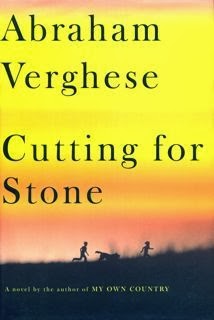
Cutting for Stone by Abraham Verghese


Genre: Africa, Drama, Family, Fiction, Relationships, Thriller, Suspense, 

Formats: Ebook, Kindle, Nook, Paperback, Hardcover, Audiobook, CD,
Publishers: Knopf
Published date:  February 3rd, 2009
ISBN: 0375414495 (ISBN13: 9780375414497)
Pages: 541
Edition language: English
Literary awards: Exclusive Books Boeke Prize Nominee (2011), Indies Choice Book Award for Adult Fiction (2010), PEN/Hemingway Foundation Award Finalist (2010), Goodreads Choice Nominee for Fiction (2009)Purchase linksAmazon,    Barnes & Noble


Amazon Book Blurb:
A sweeping, emotionally riveting first novel—an enthralling family saga of Africa and America, doctors and patients, exile and home.

Marion and Shiva Stone are twin brothers born of a secret union between a beautiful Indian nun and a brash British surgeon at a mission hospital in Addis Ababa. Orphaned by their mother’s death in childbirth and their father’s disappearance, bound together by a preternatural connection and a shared fascination with medicine, the twins come of age as Ethiopia hovers on the brink of revolution. Yet it will be love, not politics—their passion for the same woman—that will tear them apart and force Marion, fresh out of medical school, to flee his homeland. He makes his way to America, finding refuge in his work as an intern at an underfunded, overcrowded New York City hospital. When the past catches up to him—nearly destroying him—Marion must entrust his life to the two men he thought he trusted least in the world: the surgeon father who abandoned him and the brother who betrayed him.

An unforgettable journey into one man’s remarkable life, and an epic story about the power, intimacy, and curious beauty of the work of healing others.


REVIEW:
Addis Ababa - Ethiopia; Madras - India; New York & Boston -USA.

Before you read this book, consider this: the book was printed with an average of 425 words per page for 541 pages in an almost minus zero font size. That jerked my chain a bit, so I did not begin reading this book in quite the right frame of mind. 

But who in their right mind would like to put down a book beginning like this:

"My brother, Shiva, and I came into the world in the late afternoon of the twentieth of September in the year of Grace 1954. We took our first breath in the thin air, 8 000 feet above sea level, of the capital city of Ethiopia, Addis Ababa."

"Bound by birth, we were driven apart by bitter betrayal. No surgeon can heal the wound that divides two brothers. Where silk and steel fail, story must succeed."
The twins, Drs. Marion , and Shiva Praise Stone, were born to a nun, Sister Mary Joseph Praise from the Carmalite Order of Madras, who were sent with Sister Anjali to darkest Africa to serve in hospitals. She would end up at the "Missing"(Mission) hospital of Addis Ababa, Ethiopia, via Aden in Yemen, with a dark secret she cold never share.
"Sister Mary Joseph was a Malayali Christian. She could trace her faith back to St. Thomas's arrival in India from Damascus in A.D. 52. "Doubting" Thomas built his first churches in Karala well before St. Peter got to Rome."

"To her parents' chagrin, my mother became a Carmalite none,abandoning the ancient Syrian Christian tradition of St. Thomas to embrace (in her parents view) this Johnny-come-lately, pope-worshipping sect... It was a good thing her parents didn't know that she was also a nurse, which to them would mean that she soiled her hands like an untouchable."
In the first 109 pages the background to the birth is introduced and when the birth finally takes place with high drama, I sighed with relief. Pardon my momental snarkyness, but I almost put down the book and moved on. 

At first the book did not tickle my cor musculi really, it often rather annoyed the Musculus sphincter ani internus instead! The good thing was that the book distinctly distinguished itself from a romance novel by allocating 109 pages to the birth of the twins instead of to coitus, although it did challenge my knowledge of Latin and anatomy to the extreme. The good thing about romance novels is that they do not use Latin a thousand times to breath, whisper, huff, puff, holler and cry, "I Love You." 

This book did not do it either, thank goodness, but I was holding my breath! With the intensity and detail the characters' lives, especially those of the twins, were initially colored in with Latin so lavishly splashed all over it, anything was possible! And everything pointed to a great love story in the making after all!

Yes, I was equally as impressed as I was slightly blowing steam off through my nares by being constantly dropped into the world of Latin by a surgeon (Dr.Thomas Stone) whose work was his life hiding his "social retardiness" - as expressed by his colleagues. I did not want to read a medical journal at all ! 

The love of Latin genetically moves forward to the next generation. Marion would as a young boy discover the magic:

"I loved those Latin words for their dignity, their foreigness and that my tongue had to wrap around them. I felt that in learning the special language of a scholarly order, I was amassing a kind of force. This was the poor and noble side of the world, uncorrupted by secrets and trickery."
Dr. Gosh was of the opinion that the language of love and medicine was the same "Take off your shirt. Open your mouth. Take a deep breath.".

The surgeon, Dr. Thomas Stone, would have disagreed. He would have insisted on Latin near, or on, any bed! That's all he really understood. And this is where I almost gave up on the book, not because it was not well written - it was in fact brilliantly prosed from the start, but because it seemed as though I needed to order a Latin dictionary first and do at least six years of medical school before I could proceed and I was just not in the mood for it! If the storyline was to be taken away, it could have been a well-texted book on practicing medicine in the tropics.

As a young boy, Marion would receive his first stethoscope from Dr.Gosh. Was there more in this gift than the eyes could see? Was he trying to teach this boy how to find the secrets behind his parents and he and his brother's birth? :

"He invited me into a world that was not secret, but it was well hidden. You needed a guide. You had to know what to look for, but also how to look. You had to exert yourself to see this world. But if you did, if you had that kind of curiosity, if you had an innate interest in the welfare of your fellow human beings, and if you went through that door, a strange thing happened: you left your petty troubles on the threshold. It could be addictive."
It is exactly the reason why I just could not put the bloody book down, for, believe me, bloody it was! Buckets full of it!

The narrative focuses mostly on the lives of the two twins in their growing up years and which events and people would structure their characters / personalities / destinies. In the end the expression comes to mind: "It is not what happens to you, but how you handle it, that counts."

The tale is an intense, well-researched, well-written novel introducing the fascinating societies of Addis Ababa - Ethopia, Madras - India, New York & Boston in the USA. The book blends African politics, people, compassion, love, fast paced adventure and fiction in such a way that all readers from all walks of life, especially hospital-story junkies, interested in this beautiful but harsh African continent, will find some aspect of the book agreeable and worth reading. 

One of my favorite Mark Twain aphorisms is: "I can live for two months on a good compliment."

For me it is not a compliment but strings of words having me wonder around in sheer delirious bliss! Abraham Verghese rooted me to the book with prose like this:

"There was three spaced knocks on the door of Matron's office. "Come in," Matron said,and with those words Missing was on a course different than anyone could have imagined. It was at the start of the rainy season, when Addis was stunned into wet submission."
There are sweet anecdotal moments such as this: Dr. Marion Praise Stone, the narrator, recounts a moment in their childhood:
"In our household, you had to dive into the din and push to the front if you wanted to be heard. The foghorn voice was Ghosh's, echoing and tailing off into laughter. Hema was the songbird, but when provoked her voice was as sharp as Saladin's scimitar,which, according to my Richard the Lion Hearted and the Crusades, could divide a silk scarf allowed to float down onto the blade's edge. Almaz, our cook, may have been silent on the outside, but her lips moved constantly, whether in prayer or song,no one knew. Rosina took silence as a personal offense, and spoke into empty rooms and chattered into cupboards. Genet, almost six years old of age, was showing signs of taking after her mother, telling herself stories about herself in a singsong voice, creating her own mythology."
Initially there is a deceitful tranquility present in the rhythm of the prose. The author used an ingenious method to pacify the reader while having an addictive mixture of tension and drama bubbling and boiling underneath. 

Marion never wanted to sit in the twin-stroller playing with his wooden truck like his brother. Marion wanted an adult view on the world. Rosina had to constantly carry him around. 

The epiphany, for me, happened here:

P.184: "...the kitchen was alive. Steam rises in plumes as Almaz clangs lids on and off the pots. The silver weight on the pressure cooker jiggles and whistles. Almaze's sure hands chop onions, tomatoes, and fresh coriander, making hillocks that dwarf the tiny mounds of ginger and garlic. ... A mad alchemist she throws a pinch of this, a fistful of that, then wets her fingers and flings that moisture into the mortar. She pounds with the pestle, the wet, crunchy thunk thunk soon changes to the sound of stone on stone.

...Mustard seeds explode in the hot oil. She holds a lid over the pan to fend off the missiles. Rat-a-tat! like hail on the tin roof. She adds the cumin seeds, which sizzles, darken and crackle. A dry, fragrant smoke chases out the mustard scent. Only then are the onions added, handfuls of them, and now the sound is that of life being spawned in a primordial fire.

Rosina abruptly hands me over to Almaz... I whimper on Almaz's shoulder, perilously close to the bubbling cauldrons. Almaz puts down the laddle and shifts me to her hip. Reaching into her blouse, grunting with effort, she fishes out her breast.

"Here it is," she says, putting it in my hands for safekeeping...Almaz, who hardly speaks, resumes stirring, humming a tune. It is as if the breast no more belongs to her than does the laddle.
"
This scene above acted as a metaphor for this book: so seemingly uncomplicated, innocent and serene on the surface, but exploding with energy under the lid! What was hidden in the mixture would ultimately add meaning and definition, like exquisite aromas from a pot-pourri of herbs and spices to the people's lives. The experience will be hot and penetrating; sweet and scrumptious, heavy and often "indigestably" cruel.

From then on things started to happen rapidly, the drama increased leaving the reader mesmerized and in complete wonder!

The story was brilliantly constructed, although it could have been a 100 pages shorter, in my opinion. There were almost an endless role of "Latin-ish"-like hospital scenes that leaves the impression of the author expressing opinions through a novel instead of getting his ideas published elsewhere. I was surprised, when thinking back on the role of each person in the narrative, how each one of them made an amazing contribution to the story! The characters was well developed; the denouement at the end of all the elements a huge surprise. The story completes a full unbelievable circle, which really had me sitting back in total amazement. The end left me breathless....and yes speechless...! And when I started recounting all the elements in the book I was amazed at the unusual brilliant tale it was.

A Great read!


ABOUT THE AUTHOR:


Abraham Verghese, MD, MACP, is Professor for the Theory and Practice of Medicine at the Stanford University School of Medicine and Senior Associate Chair of the Department of Internal Medicine.

Born of Indian parents who were teachers in Ethiopia, he grew up near Addis Ababa and began his medical training there. When Emperor Haile Selassie was deposed, he completed his training at Madras Medical College and went to the United States for his residency as one of many foreign medical graduates. Like many others, he found only the less popular hospitals and communities open to him, an experience he described in one of his early New Yorker articles, The Cowpath to America.

From Johnson City, Tennessee, where he was a resident from 1980 to 1983, he did his fellowship at Boston University School of Medicine, working at Boston City Hospital for two years. It was here that he first saw the early signs of the HIV epidemic and later, when he returned to Johnson City as an assistant professor of medicine, he saw the second epidemic, rural AIDS, and his life took the turn for which he is most well known - his caring for numerous AIDS patients in an era when little could be done and helping them through their early and painful deaths was often the most a physician could do.

His work with terminal patients and the insights he gained from the deep relationships he formed and the suffering he saw were intensely transformative; they became the basis for his first book, My Own Country : A Doctor's Story, written later during his years in El Paso, Texas. Such was his interest in writing that he decided to take some time away from medicine to study at the Iowa Writers Workshop at the University of Iowa, where he earned a Master of Fine Arts degree in 1991. Since then, his writing has appeared in The New Yorker, Texas Monthly, Atlantic, The New York Times, The New York Times Magazine, Granta, Forbes.com, and The Wall Street Journal, among others.

Following Iowa, he became professor of medicine and chief of the Division of Infectious Diseases at Texas Tech Health Sciences Center in El Paso, Texas, where he lived for the next 11 years. In addition to writing his first book, which was one of five chosen as Best Book of the Year by Time magazine and later made into a Mira Nair movie, he also wrote a second best-selling book, The Tennis Partner : A Story of Friendship and Loss, about his friend and tennis partner's struggle with addiction. This was a New York Times' Notable Book.

Monday, October 21, 2013

The Gospel of Silk - by Stephen Lee


Genre
: Mystery, Murder, Suspense, Drama, Relationships, Memoir
Formats: Paperback, Kindle, Nook
Publishers: Createspace
Published date: October 2012
ISBN: 148003245X (ISBN13: 9781480032453)
Pages: 212
Edition language: English
Purchase links: Amazon,    Barnes&Noble


Amazon Book Blurb:
William L. Payne preached silk as the salvation of the impoverished village of Rosewick in 1926. He persuaded investors his silk factory would make them rich and the region prosperous. He was mysterious, charismatic, and a little scary. He was said to have performed miracles, though he was anything but divine. He claimed to be an illegitimate son of Kaiser Wilhelm II, and nurtured the notion that he carried the German crown jewels in his little black satchel. Though Howard Godwin, 9, suspected Payne was a German spy, he became his devoted disciple . . . and his Judas.


REVIEW:

This is one of those books that I bought from reading the Amazon blurb and looking at the cover design. I thought to myself: This book is talking to me. Take it. Of course I did. 
The more I got into the story of Howard Godwin, the more enchanted I became. Memories of a young boy meeting a charismatic William J. Payne in his hometown, Rosewick, got me in the end so mesmerized, I could feel my heart jumping with joy when a little bit of time became available and I could open the book to continue reading. 
Payne’s presence created an element of suspense and excitement in the humdrum life of the town, but would also change the history of this community forever.
Excitement...I cannot find the right words right now. But it is there and I am smiling, shaking my head and reveling in the innocent observations of a young-man-in-the-making, about his town, his friends, his absentee father (although he suspects he was kidnapped anyway) , the racial discrimination against one of his best friends, Woodrow W. Wade - alias Scooter, and the many other people playing a role in cementing his personality through the events that played itself out around the establishment of a silkworm industry in their town. 
Payne persuaded them that this poor region, no less than the exotic realms of the Orient and Europe was eminently suited to the production of this luxurious fabric, that no more was required than honest, diligent industry of the populace to make it blossom into a booming region of ordered mulberry orchards, bustling silkworm works, fine homes and genteel cultured people.
Payne would turn everything mundane or momentous into something magical. He just had with it took to turn the little town Rosewick into a place to remember for life. He was educated, sophisticated, and so refined.
Grave yards; old spooky homes; a magician who convinced the Pinewood school girls - who 'flocked to him like pigs to slop, that he was dead and buried for three days and crawled out of his grave; sixteen-year-old Amelia Hendershot who drove trucks and smoked cigarettes - all of it in the year 1926, got me losing sleep to read just a little bit more before reality knocked before daybreak again.
Somewhere, while being lost in this engrossing tale, I was thinking about the Pied Piper of Hamelin, and Huckleberry Finn, and innocent little boys becoming proud men with a wealth of memories to share. One of the people who would influence Howard's approach to life was his grandfather, who was just a teeny bit more cagier old bird than a lot of people.
I wondered where I could add words such as “prestidigitation,” and "mellifuously" in my review. The book constantly had me seeking wisdom in the dictionary. What a rich thrill!
“All of life is magic,” Payne said. “Think of it -- our birth, our life, our death, the power of herbs to heal, the feeding of our bodies, the movement of the blood through our veins. “That we know a little of the mechanics does not remove the magic. That there are explanations does not make it less a mystery in the end. We understand so little, and we make our beliefs so small.”
Mysteries are what make life interesting. It could not have become truer when a murder took place in the graveyard of Rosewick. The events afterwards would rob three young boys of their innocence forever. 
How sad it will be if this book slips through the grid and get lost to an audience it so richly deserve. I cannot stress enough how overwhelmed I was by the richness of the story, the colorful descriptions of the villagers' lives, the meticulous detail of the surroundings, and the completeness of the tale. It is one of those rare treasures you only find a few times in your life.
I recommend it to anyone who believes that real life hides its own mysteries and magic. Besides, it is based on a true story.
This spur-of-the-moment buy was a brilliant decision!


ABOUT THE AUTHOR:
Stephen Lee has worked for newspapers in places as far-flung as Maui and Manhattan. He is also a lawyer . He is married, and his wife of many years is an educator, author, and a talented china painter.

Monday, October 14, 2013

The Ghosts of Eden by Andrew J.H. Sharp


Genres: Africa, Uganda, historical fiction, family, community, drama
Formats: Paperback(384 pages), Kindle, Nook, Ebook
Published date:  May 21st 2009
Publishers: Picnic Publishing Ltd, Troubador Publishing Ltd, 
Original title: The Ghosts of Eden
ISBN 0955861330 (ISBN13: 9780955861338)
Edition language: English
Literary awards: Waverton Good Read Award (2010), International Rubery Book Award Nominee (2011)
Purchase links: Amazon, Barnes & Noble, Kalahari


Amazon book blurb: 
Winner of the 2010 Waverton Good Read Award for the best first novel by a British author, and shortlisted for the 2011 International Rubery Book Award, The Ghosts of Eden is a compelling story of loss, infatuation and atonement.

'I found I had accidentally ordered a masterpiece.'
Andrew Crofts

Zachye, tending cattle in the grasslands of East Africa, and Michael, son of missionaries, are happy in their childhood idyll. But the world is changing, propelling them towards tragedy. Haunted by guilt and grief they grow up severed from their heritage. When they both fall in love with the same beautiful woman, they must each face their past and hear their ancestors, if they are to be the one to win her...


In lyrical prose Andrew JH Sharp immerses the reader in a world where ancient ways of life and belief are being overwhelmed by the new. Neither a bandit-soldier in the remnants of Idi Amin's army nor a restless and detached surgeon can escape the memory of innocent boyhood. An intriguing cast of nomads, missionaries, expatriates and Indian traders share a landscape haunted by ancestral ghosts. The reader is drawn to a moving denouement where love and mortality are confronted.

REVIEW: 
Three young boys, three adult men: a story of kinship, hardship and bonding.


No man can know where he is going unless he knows exactly where he has been and exactly how he arrived at his present place -  Maya Angelou


Michael Lacey is a successful British surgeon. He is returning to Africa to deliver a lecture at the twelfth conference of the Lake Regions Surgical Association in Uganda after leaving the country as a young boy with no inclination of ever returning.

Yet, here he was, many years later, approaching his destiny and history with an indifference and arrogance he thought might protect him. His childhood memories floods back in astonishing detail. He meets Felice, a woman who becomes the bearer of all the supressed truths and wisdoms he never wanted to consider ever again, demonstrating the power of love and kinship he refused to acknowledge.


For the first time he trusts someone enough to share his story. But it would not happen as he planned and his eventual confrontation, with himself, will happen in a place he never thought he would become part of, yet, is inevitably destined for. Mother Africa did not forget him. He was just not interested, nor prepared, to accept it until he finally had to confront his old wounds which he, as a perfectionist and surgeon, could not heal himself. It would all be triggered when he had to save a life and was confronted by who he thought he was, and who he really was.

This is the story of three boys. Between them, they represent the multiculturalism of Uganda. Michael the protagonist, was an English missionary child. As a young boy in Africa he was emotionally ripped apart by two major tragedies. The events would lead to a long line of broken relationships, a loss of his faith and innocence and an emotional sterilized state in which he felt safe.

Michael’s talent for memorizing text came in handy when he had to attend a party – a trick to compensate for his lack of small talk. He could recite long passages from ‘The Rime of the Ancient Mariner’, Gray’s Anatomy, even the three chapters of the prophet Habakkuk or some other obscure part of the Bible. He wondered whether his gift was innate, or whether – a dark thought rising again – it was acquired through having to learn memory verses at his religious school.

There were the two brothers, Stanley and Zachye Katura of the Bahima tribe, growing up attending their father's cattle, learning to believe and respect the traditions of their ancestors as it was passed down from one generation to the next for thousands of years. But changes were coming: Stanley, the smaller and weaker brother, was to be sent to school, while Zachye must stay behind to tend their fathers wealth, his cattle. There was initially only enough money to send one of them into the British educational system offered in the local schools. But Zachye, as the oldest, insisted in going as well in competition with his brother.

The three boys would meet twice: as young boys, and again as adults. The first incident would shape their future through the choices made on their behalf by the adults in their lives.

The second would finally define them as adults through their own choices in dealing with their pasts.

It’s a grand opera in Africa and anyone can be big on our stage – although,’ his tone darkened, ‘we have to accept that, as in opera, high drama is the norm.’

This is one of those narratives that invites the reader into an Africa that is not sold with much fanfare, nor elaborate pomp and ceremony. The story enfolds the richness of souls and minds superseding all the hype presented to the world. It explains and celebrates the heart of a continent in its diversity and richness instead. It explains why the people of Africa have no equal anywhere in the world; why everyone who ever touches her soil, never want to leave again and if they do, often do so heartbroken...

The book brings a warmth and compassion for all the characters, good and bad. It explores the different meanings of happiness and love. It is one of those books about Africa that establishes a respect for the continent and her people, their values and history, without boring or losing the reader in the well-executed narrative. It is a blend of Alexandra Fuller's memoirs and that of Abraham Verghese, with a touch of Alexander McCall Smith added for good measure. Africa as Eden is confirmed, through the beautiful prose, for those who love her and for others who want to find her gentle soul. This is clearly not a book written by an outsider. This story comes from within and it shows.


ABOUT THE AUTHOR:


Andrew Sharp's first novel, The Ghosts of Eden, won the 2010 Waverton Good Read Award and was shortlisted for the 2011 International Rubery Book Award.

Andrew was brought up in East Africa and has worked in Uganda, Zambia and Zimbabwe - where his second novel, Fortunate, is set. He is based in the East Midlands in the UK where he combines his medical work with writing.


Enhanced by Zemanta