Showing posts with label Historical fiction. Show all posts

Saturday, June 17, 2017

The Shadow of the Wind by Carlos Ruiz Zafón


At last, yes, at last! It was finito! What a read it was. Honestly, I thought it was never going to end, that the saga beginning in 1945, after the Civil War in Spain, was just too dragging and too detailed for my sensitive soul. Emotionally I shut down around the halfway mark, hanging onto the picturesque, descriptive prose for dear life, sensing a light at the end of the tunnel. 

Good lordie, miss molly, good gracious my angel, good heavens dear father! What a journey it was through the antique bookshop in Barcelona on Calle Santa Anna, to the streets of the city where the memories spilled like blood flowing like rain water though the gutters, where souls got ripped, raped and destroyed by the brutality of the war.

Nothing feeds forgetfulness better than war, Daniel. We all keep quiet and they try to convince us that what we’ve seen, what we’ve done, what we’ve learned about ourselves and about others, is an illusion, a passing nightmare. Wars have no memory, and nobody has the courage to understand them until there are no voices left to tell what happened, until the moment comes when we no longer recognize them and they return, with another face and another name, to devour what they left behind.

1945. Barcelona Spain. It was a book, Shadows of the Wind by one Julián Carax, which brought the history alive for young Daniel. Not because it was explained in the book, but because through mysterious events after reading the book. It was a rare book, which reverberated quickly through the echoe chambers of the world of book collectors. It immediately draw attention as the last book of the author. Daniel Sempere made a promise never to tell where he he found it and protect it as his most precious possession.

Daniel's father: This is a place of mystery, Daniel, a sanctuary. Every book, every volume you see here, has a soul. The soul of the person who wrote it and of those who read it and lived and dreamed with it. Every time a book changes hands, every time someone runs his eyes down its pages, its spirit grows and strengthens.

The Cemetery of Forgotten Books, hidden behind heavy bolted doors and high walls, brought voices alive of authors passed and present, who needed their story discovered and told. 

Brave, curious, but innocent, ten-year-old Daniel Sempere did not foresee the consequences when he opened that particular book to read. Nor could the effect it would have on him and his father's life be calculated.

Clara: I had never known the pleasure of reading, of exploring the recesses of the soul, of letting myself be carried away by imagination, beauty, and the mystery of fiction and language. For me all those things were born with that novel.

And so it was for Daniel as well. 

People populated Daniel's life from different walks of life. His journey to become a man, would cross paths with villains and angels; carers and destroyers. His life would forever be connected to those who survived the manslaughter of war.
When peace finally came, it smelled of the sort of peace that haunts prisons and cemeteries, a shroud of silence and shame that rots one’s soul and never goes away.

Along the way, a pathos and empathy grew for the people who managed to survive. A tragicomedy, a suspense thriller, a historical fictional tale - a culmination of the voices and ambiance in books such as: 
One Hundred Years of Solitude by Gabriel García Márquez; 
Captain Corelli’s Mandolin by Louis de Bernières; 
The Time in Between by María Dueñas; 
Winter in Madrid by C.J. Sansom; 
Picasso's War by Russell Martin; 
For Whom the Bell Tolls by Ernest Hemingway
The Return by Victoria Hislop
The Perfume Garden by Kate Lord Brown

Diction, motivation, actions - it all flows along the prose adding context to bravery and courage, unlocking the strange chain of destiny between them. To these people, hope was cruel, it had no conscious, and words were sometimes better of in their prison of memories. Daniel had the power to keep these voice on paper alive, to allow them to be remembered.

And then there is the backdrop of love in all its despicable, deceiving, destructive or honorable definitions. It meanders trough the labyrinth of the The Cemetery of Forgotten Books as well as the lives of the people who survived to tell their stories to Daniel. It was a constant reminder of what makes us all vulnerable and victorious in life. For Daniel, it was a fast, uncompromising road to adulthood in which no secrets remained hidden. For those who wanted to share their tales, words became a sort of melancholic revenge.

Nurieta Monford:  I began to dress like a pious widow or one of those women who seem to confuse sunlight with mortal sin. I went to work with my hair drawn back into a bun and no makeup. Despite my tactics, Sanmartí continued to shower me with lascivious remarks accompanied by his oily, putrid smile. It was a smile full of disdain, typical of self-important jerks who hang like stuffed sausages from the top of all corporate ladders.


While the first snow of winter dropped like tears of light on the Plaza de Cataluña, an old man, trying to catch the snow with his gloves, wished Daniel good luck, his eyes the color of gold, like magic coins at the bottom of a fountain. What else could Daniel do but clung to the blessing and run ...

The thing about words is that it takes us prisoner when rolled out by experienced wordsmiths. This is one of those moments, although I must admit that only the beginning chapters, almost to the middle, and the last third of the book finally captured me beyond imagination. I almost gave up, but the magic in the prose propelled me forward. Relentlessly.

I just realized why not anyone can write a book, but why everyone, like yours truly, can get lost in the melody flowing from the magical alphabetic strings, the symbiotic sounds of voices on paper. Sometimes it is this music that kept me reading, surpassing the moral of the story. The quality of thought and execution in this novel confirmed the addiction of words and books.

Humor and hope are strange bedfellows. It may manifest in the intimations of paradise ... a last dance with Eros ... 

Happiness in every which way had a purpose, even in galleries of despair, even softened by ecumenical disguise. Sincere laughter came. In 1966 it all made finally sense to Daniel Sempere. Doom and gloom have a counterbalance. A very good one. All it needed was time. And good readers to follow the light to the last full stop of the tale. 

The end.


Read this comprehensive and excellent biography of the author at

Classic Spanish Books

The Chilbury Ladies' Choir by Jennifer Ryan


First funeral of the war, and our little village choir simply couldn’t sing in tune. “Holy, holy, holy” limped out as if we were a crump of warbling sparrows. But it wasn’t because of the war, or the young scoundrel Edmund Winthrop torpedoed in his submarine, or even the Vicar’s abysmal conducting. No, it was because this was the final performance of the Chilbury Choir. Our swan song.

...It was the funeral of Edmund Winthrop, the Brigadier’s despicable son who was blown up in a submarine last week. Only twenty he was—one minute a repulsive reptile, the next a feast for the fishes.

...Beside her, that foreign evacuee girl looked petrified, like she’d seen death before and a lot more besides.

And so begins a novel, with Miss Edwina Paltry's letter to her sister (quite a fitting surname given the different meanings: small, meagre, trifling, insignificant, negligible, inadequate, insufficient, scant, scanty, derisory, pitiful, pitiable, pathetic, miserable, sorry, wretched, puny, trivial, niggardly, beggarly, mean, ungenerous, inappreciable, mere).

The fictional tale and characters are based on the real diaries and journals which were written during the first year of WWII in Britain for an organization called Mass Observation. They published a newsletter in which the hearts, minds and souls of the ordinary citizens were shared.

The epistolary character of the novel is the result of the author's commemoration of these writers, and the stories her grandmother shared about the war. Four main narrators share through their diaries and letters the funny, racy, touching or terrifying events in Chilbury during 1940, leaving the reader in the midst of a richly textured novel populated by the citizens of the fictional village of Chilbury. 

The main narrators are:
Miss Edwina Paltry - in letters to her sister:
Brace yourself, Clara, for we are about to be rich! I’ve been offered the most unscrupulous deal you’ll ever believe! I knew this ruddy war would turn up some gems—whoever would have thought that midwifery could be so lucrative! But I couldn’t have imagined such a grubby nugget of a deal coming from snooty Brigadier Winthrop, the upper-class tyrant who thinks he owns this prissy little village. I know you’ll say it’s immoral, even by my standards, but I need to get away from being a cooped-up, put-down midwife. I need to get back to the old house where I can live my own life and be free.
Mark these words: her little scheme would have her flustered like a bluebottle in a jam jar in the end.

Kitty Winthrop - in her diary - thirteen years old: she saw people as beams of a rainbow, and her eighteen-year-old sister, Venitia, as simply a vile beast.
I like to see people as colors, a kind of aura or halo surrounding them, shading their outsides with the various flavors of their insides.
Me—purple, as brilliant and dark as the sky on a thundery night
Mama—a very pale pink, like a baby mouse
Daddy—soot black (Edmund was also black, but black like a starless sky)
Mrs. Tilling—light green, like a shoot trying to come up through the snow
Mrs. B.—navy blue (correct and traditional)
Henry is a deep azure blue, to match his eyes.
Silvie - in her diary - the much younger Jewish evacuee from Czechoslovakia with her terrible secret.

Venitia Winthrop - in her letters to the vicar's daughter, Angela Quail.

Mrs. Tilling - in her journal - a nurse and the local billeting agent.

Two male voices appeared in their own letters as well.

Flt. Lt. Henry Brampton-Boyd - the most sought-after bachelor in the village. He had many a nasty nail out on dainty little ladies' fingers and a lot to answer for. Even Elsie the parlour maid got her head around something.

Colonel Mallard - in his letters to his sister Mrs. Maud Green. He arrived as curmudgeon old Mr. Bear, and left as snuggly Mr. Toodles, well .... sort of. Life would drastically change for him in Chilbury, that's for sure. 

Miss Primrose Trent from London moved into Chilbury to become the Professor of Music at the Lichtfield University. She revived the choir, now deprived of all the men who went off to war. The Vicar Quail was convinced that all the oxygen and raison d'etre left town with the men. The women would prove him wrong. The choir gave women their voices. The voices they thought they never had. And therein lies the charm of this story of courage, endurance, resilience and hope.

The peripheral characters brought much more color to Kitty's rainbow. They read like the Chilbury telephone directory, but what a wonderful, unbelievable, atmospheric tale they all brought alive.

I'm not going into the plot or storyline. It is for the readers to discover and enjoy through the picturesque prose.

GREAT READ!!! Just absolutely BEAUTIFUL!

RECOMMENDED


Hello, and thank you for being interested in my author page. I'm the author of The Chilbury Ladies' Choir, which came out in February, 2017. It is my very first novel. Before becoming a writer, I was a nonfiction book editor, editing books about politics and economics, travel and health, and biography and memoir. I worked in London before moving to the Washington, DC, area ten years ago with my husband and two children.

I was born in a village in Kent, England, not too far away from the fictional village of Chilbury. The novel is based on the stories of my grandmother who was twenty when the Second World War began, mostly hilarious tales about bumping into people in the blackout, singing in the air raid shelters, and the freedoms women had during the war years--the excitement and romance. She also belonged to a choir, and her choir stories dramatized the camaraderie and support they all took away; the knowledge that they weren't in this alone. The Chilbury Ladies' Choir uses my dear grandmother's stories as its backdrop. 

If you have read The Chilbury Ladies' Choir, thank you. I very much hope that you liked it. And if you have yet to read it, I hope you enjoy it as much as I loved writing it. Please visit my website: www.jenniferryanbooks.com


Oh, Pioneers! by Villa Cather


REVIEW:


Once again, a second time, I was at the mercy of Willa Cather's writing, and closed this book with a feeling of accomplishment: as a reader as well as a human being.


In my world, more than a century after this novel was written, we still battle nature on a daily basis and we are aware that nature will return the moment we leave this little piece of earth behind forever. With seed, roots and rain, the stories of ages of human history will be covered in an instant, wiped away as though we never walked these paths a few million times through the slow passing of time.


Willa Cather gloriously painted the lives of pioneers in the unforgiving virginal wilderness at the turn of the 20th century, somewhere between 1883 and 1890, by describing the toughness and resilience of a group of immigrants in surviving the harshness of life on the prairies of Nebraska. The Bergsons children and their neighbors established a strong community through stubborn pride and dreams. It was their dreams, after all, that kept hope alive and celebrated the good times when it finally arrived. However, tragic love, diverse opinions, and hard manual labor drove those who preferred to stay behind, when the less experienced farmers were forced to leave. 


Alexandra Bergson instinctively took the road less traveled, the one on which love took a second place, and meticulous learning challenged old ideas, and the less brave combatants against nature preferred to leave. She compassionately took care of neighbors, family and friends, by making choices that left herself devoid of love and allowed loneliness to become her a life companion. The ones who benefited the most appreciated her the least, but her promise, as well as understanding of her father's insight into the land and its possibilities, made her stick to her dreams and decisions. 


The most important theme in the novel starts out in the beginning of the book, in the little town Hanover, Nebraska, in the bitterly cold winter, when Alexandra's little brother Emil's little kitten got chased up a telephone pole by stray dogs. He is waiting for her at the store while she is at the doctor's office. Carl Linstrum, a neighbor, arrives to rescue the little kitten on Alexandra's request for help. In the store where they try to warm up again, they meet the exotic Bohemian little girl Marie Tovesky who, with her sunny disposition, brown curly hair like a brunette doll's, her coaxing little red mouth, and round, yellow -brown eyes, with their golden glints like the Colorado mineral called tiger-eye, attracts men like flies even as a toddler. 


The plot centers around the strong bonds of friendships, which pushes love aside for most of the book, yet cannot manage to deny this strong attraction between humans in the best and worst of ways. Two love stories, with two different endings, snake through the tale. Two relationships are tested by different rules. Perseverance nestles itself in different situations leaving the people involved exhausted or dead. 


This book is so rich in emotional ironies, that I sat back afterwards and wondered why it was banned numerous times by the American Library Society. The kaleidoscope of human activities, driven by strong emotional intensity portrayed people in all their splendor. What part of this masterful text of human nature in all its intricate ways insulted some readers enough to have it banned?

“And now the old story has begun to write itself over there," said Carl softly. "Isn’t it queer: there are only two or three human stories, and they go on repeating themselves as fiercely as if they had never happened before; like the larks in this country, that have been singing the same five notes for thousands of years.”
Since love does not form the center of the plot, although many readers probably wanted it to do so, it does play out in the hearts of lonely, often desperate people. It becomes a secondary, underlying force in the book. 

The major focus, in my humble opinion, is the relationship between the different role players and their land.

Alexandra: "The land belongs to the future, Carl; that's the way it seems to me. How many of the names on the county clerk's plat will be there in fifty years? I might as well try to will the sunset over there to my brother's children. We come and go, but the land is always here. And the people who love it and understand it are the people who own it--for a little while."
Love becomes the third member of the marriage between humans and nature, resulting in an overcrowding of the relationship. Tears of joy and sorrow follows, as can be expected. 

This was a magnificent read. The prose lends itself to numerous memorial quotes. Willa Cather knew how to sell this part of the Divide to her readers with her poetic descriptions of the land and the people who conquered it. 


HIGHLY RECOMMENDED!


BOOK BLURBO Pioneers! (1913) was Willa Cather's first great novel, and to many it remains her unchallenged masterpiece. No other work of fiction so faithfully conveys both the sharp physical realities and the mythic sweep of the transformation of the American frontier—and the transformation of the people who settled it. Cather's heroine is Alexandra Bergson, who arrives on the wind-blasted prairie of Hanover, Nebraska, as a girl and grows up to make it a prosperous farm. But this archetypal success story is darkened by loss, and Alexandra's devotion to the land may come at the cost of love itself.

At once a sophisticated pastoral and a prototype for later feminist novels, O Pioneers! is a work in which triumph is inextricably enmeshed with tragedy, a story of people who do not claim a land so much as they submit to it and, in the process, become greater than they were.


ABOUT THE AUTHOR:

Willa Sibert Cather was an American writer who achieved recognition for her novels of frontier life on the Great Plains, including O Pioneers!, The Song of the Lark, and My Ántonia. Wikipedia
Born: 7 December 1873, Gore, Virginia, United States
Died: 24 April 1947, Manhattan, New York City, New York, United States
Education: University of Nebraska–Lincoln
Awards: Pulitzer Prize for Fiction, American Academy of Arts and Letters Gold Medal for Fiction
Movies: My Antonia, A Lost Lady, O Pioneers!, Masterpiece Theatre: The Song of the Lark

Saturday, December 21, 2013

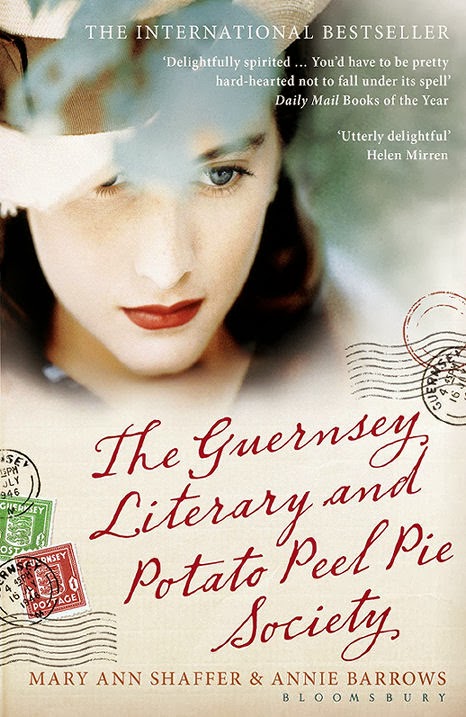
The Guernsey Literary and Potato Peel Pie Society - by Mary Ann Shaffer, Annie Barrows


REVIEW
The more I read about the Second World War, the more I am so thankful that it was over and can only hope and pray it will never be repeated anywhere ever again on that scale! I never liked watching war movies, neither reading the graphic detail, still don't, since the cruelty, suffering, hardships and horror are way too much to handle for me personally. So many millions of books were written about it that the actual message gets lost in the apathy resulting from too much information over a too long period of time. But then I come across a an epistolary novel such as The Guernsey Literary and Potato Peel Pie Society and I am once again mesmerized by the immensity of the human spirit, the need to survive, and the determination to succeed under appalling circumstances after the devastating war.

The letters between Juliet Ashton and the members of the society got me hooked to the book since the first "Dear Sidney" flowed from the pages. First off, it was like being invited into someone's personal space, mind, life, by being able to read their personal letters.

Secondly, the story is based on old fashioned paper letters which do not hail the same excitement or even are in fashion anymore in our modern world and the reader is immediately drawn into the nostalgia of a romantic art that disappeared almost completely.

The charm, as well as magic of the book being written in a constant flow of letters keeps the reader mesmerized. The characters introduce themselves through their own thoughts they shared with the writer in their letters to her. Juliet needed a fresh idea for her new book and accidentally receives a letter from the Guernsey island from a man who can hardly express himself verbally(she would later find out), yet writes detailed letters.

The Literary Society on the Guernsey island saved people's sanity in many ways during the German occupation when Elizabeth, the island's own earth angel(in modern terms she would be described as a people's pleaser) lied the society into existence. The society, which was afterwards forced to become functional, was like a key opening up the people's slumbering personalities when unlikely people were forced to read books, never realizing what an effect it would have on each person's life.

Another thought which struck me while reading how the islanders were forced by hunger and dire circumstances to burn their own wooden furniture, beloved books, even the banisters in their homes to survive the Occupation, was how the effect on the world is slowly repeating itself with the deforestation of the planet and what an effect it will ultimately have on people's lives. If there is one message I would like to take from the book it will be to plant more trees. I have not planted enough! It will also be in honor of those people who suffered severely in the wars of the world. Where there is war, nature is paying a dire price. Where there is peace the trees start growing again and the flowers come back. Earth heals itself like the human spirit gets healed by time.

The wit in the book is refreshing, the drama exhilarating and the narrative finishes off every issue. Compared to other war novels, it is a kind of 'light' read, but not too cheesy to be just another romantic novel for the light-brained. It has some meat to the story.

The fictional characters are ordinary human beings, even the male hero is an ordinary quiet man. It's based on real-life characters in real-life circumstances - people we all recognize as our families, friends and neighbors - no frills no fuzz, no fantasy or unrealistic heroes.

The book includes love, romance and everything needed to keep female readers(especially) interested, but surprisingly does not need to fall into the sex trap to make it acceptable to prospective buyers. The story itself is strong enough to guarantee the best seller status and deserves it. I give it four stars for excellent research, the delightful wit, as well as the dignity and respect it shows towards the more intelligent readers. If it was only a romantic novel, I would have dropped it after page three, but I finished it and loved every moment. It was worth it.

______________________________________________________________________________

AMAZON BOOK BLURB
It's 1946 and Juliet Ashton can't think what to write next. Out of the blue, she receives a letter from Dawsey Adams of Guernsey - by chance, he's acquired a book that once belonged to her - and, spurred on by their mutual love of reading, they begin a correspondence. When Dawsey reveals that he is a member of the Guernsey Literary and Potato Peel Pie Society, her curiosity is piqued and it's not long before she begins to hear from other members. As letters fly back and forth with stories of life in Guernsey under German Occupation, Juliet soon realizes that the society is every bit as extraordinary as its name.
______________________________________________________________________________

ABOUT THE AUTHORS
Anne Shaffer
Mary Ann Shaffer worked as an editor, a librarian, and in bookshops. Her life-long dream was to someday write her own book and publish it. The Guernsey Literary and Potato Peel Pie Society was her first novel. Unfortunately, she became very ill with cancer and so she asked her niece, Annie Barrows, the author of the children’s series Ivy and Bean, as well as The Magic Half, to help her finish the book. Mary Ann Shaffer died in February 2008, a few months before her first novel was published.


Annie Barrows is the enormously talented author of many acclaimed books including he Ivy + Bean series, The Magic Half, and the Guernsey Literary & Potato Peel Pie Society. She has also written non-fiction books under the pen name Ann Fiery. Annie’s latest book in the Ivy + Bean series is No News Is Good News. She worked for years as an editor until she decided to write children’s books like the ones she loved growing up. Her dedicated fans are eternally grateful she decided to pursue her dream. (Information source)


______________________________________________________________________________
ABOUT THE BOOK

Genres: Historical fiction, Second World World, Island Guernsey, Drama, Community, Romance, Suspense
Formats: Hardcover, Paperback, Mass Market Paperback, Kindle, Nook, Audio, CD, Audiobook,
Number of Pages: 257
Publishing date: May 10, 2009
Edition Language: English
ISBN: 0747596689
ASIN: B002R88G4U
Purchase links:  Amazon, Amazon UK, Barnes& Noble

______________________________________________________________________________

Thursday, November 14, 2013

Fortunate by Andrew JH Sharp


Genres: British novel, African adventure, Mystery, Historical fiction, Drama, Suspense, Zimbabwe
Original title: Fortunate
Number of pages: 368
Formats: Paperback, Kindle, Nook
ISBN:  1783060018 (ISBN13: 9781783060016)
Publishers: Troubador Publishing Ltd
Publishing date: July, 1st, 2013
Edition language: English
Purchase links: AmazonBarnes & Noble

Amazon Book Blurb:
From the winner of the 2010 Waverton Good Read Award comes another good read. Beth Jenkins – locum doctor, semi-bereaved wife – runs away from home at the age of twenty-eight and a half and becomes heroine of a revolution.

Locked into a lonely future by a cruel twist of fate, Beth reaches breaking point, leaves her husband, and flees to faraway Zimbabwe. But there she finds herself at the centre of a deadly struggle for the ownership of a farm. From a guest of honour at the President’s table to a disastrous decision that betrays a good man, her fresh start threatens to end in catastrophe. Does the land, and its painted rocks, hold clues to atonement and re-found love?

Fortunate is an intelligent, moving novel with a gripping plot about how to defy fate and about the relationship we have with the land we live on.


REVIEW
A true story embedded in fiction. From this angle the reader can expect that drama will be limited and characters cotton-wrapped. In a sense it is true.

Yet, Beth Jenkins, a locum doctor, young and somewhat lost in a one-year old marriage to the love of her life - who lost his mind, has enough on her plate, and enough inexperience to make a royal mess of things. Especially when she gets entangled with her patients such as Mr. de Villier. He needs a favor, and Beth has enough challenges, with her demanding mother-in-law, a new mysterious friend, Fortunate, and circumstances pressuring her, to evacuate her poshy life in England for the more intimidating African bush. 

Zimbabwe has just been liberated. What promised to be heaven soon proved to be hell-on-steroids for the inhabitants and a little bit better for tourists with pockets full of spending money. For illegal tourists it gets even more tougher and thrilling! The adventures are more intense, the ambiance volatile. That is where Beth's break from her own reality leads her to. She would make enough mistakes to last her a lifetime, but would gain enough new insight into a world her husband, as an archaeologist, discovered and loved. Her voyage will ultimately lead her home - a place she was unable to find before. Home. It is not what she thought it was.

It is a great story. A relaxing, informative, adventure. A soft-landing for anyone interested in reading more about the African lifestyle behind the glitz and glamour of an African Safari, but with the same intensity and feeling of being-there. Really being there. Nothing in the book is outrageously extravagant or overly exaggerated. On the contrary! ...

This is a really enjoyable book. It is multidimensional - covering the life of a young woman finding her path in life, meeting warm-hearted, sincere Africans, introducing tragicomedian politicians acting out their mafia-style looting of a continent's resources, and addressing loves lost and found. These elements serve a smorgasbord of different interests, which makes it an informative, great read. 

It is the second book of Andrew J. H. Sharp that I read. I am looking forward to the third, for sure. 


ABOUT THE AUTHOR


Andrew Sharp's first novel, 
The Ghosts of Eden, won the 2010 Waverton Good Read Award and was shortlisted for the 2011 International Rubery Book Award.

Andrew was brought up in East Africa and has worked in Uganda, Zambia and Zimbabwe - where his second novel, Fortunate, is set. He is based in the East Midlands in the UK where he combines his medical work with writing.


Monday, October 14, 2013

The Ghosts of Eden by Andrew J.H. Sharp


Genres: Africa, Uganda, historical fiction, family, community, drama
Formats: Paperback(384 pages), Kindle, Nook, Ebook
Published date:  May 21st 2009
Publishers: Picnic Publishing Ltd, Troubador Publishing Ltd, 
Original title: The Ghosts of Eden
ISBN 0955861330 (ISBN13: 9780955861338)
Edition language: English
Literary awards: Waverton Good Read Award (2010), International Rubery Book Award Nominee (2011)
Purchase links: Amazon, Barnes & Noble, Kalahari


Amazon book blurb: 
Winner of the 2010 Waverton Good Read Award for the best first novel by a British author, and shortlisted for the 2011 International Rubery Book Award, The Ghosts of Eden is a compelling story of loss, infatuation and atonement.

'I found I had accidentally ordered a masterpiece.'
Andrew Crofts

Zachye, tending cattle in the grasslands of East Africa, and Michael, son of missionaries, are happy in their childhood idyll. But the world is changing, propelling them towards tragedy. Haunted by guilt and grief they grow up severed from their heritage. When they both fall in love with the same beautiful woman, they must each face their past and hear their ancestors, if they are to be the one to win her...


In lyrical prose Andrew JH Sharp immerses the reader in a world where ancient ways of life and belief are being overwhelmed by the new. Neither a bandit-soldier in the remnants of Idi Amin's army nor a restless and detached surgeon can escape the memory of innocent boyhood. An intriguing cast of nomads, missionaries, expatriates and Indian traders share a landscape haunted by ancestral ghosts. The reader is drawn to a moving denouement where love and mortality are confronted.

REVIEW: 
Three young boys, three adult men: a story of kinship, hardship and bonding.


No man can know where he is going unless he knows exactly where he has been and exactly how he arrived at his present place -  Maya Angelou


Michael Lacey is a successful British surgeon. He is returning to Africa to deliver a lecture at the twelfth conference of the Lake Regions Surgical Association in Uganda after leaving the country as a young boy with no inclination of ever returning.

Yet, here he was, many years later, approaching his destiny and history with an indifference and arrogance he thought might protect him. His childhood memories floods back in astonishing detail. He meets Felice, a woman who becomes the bearer of all the supressed truths and wisdoms he never wanted to consider ever again, demonstrating the power of love and kinship he refused to acknowledge.


For the first time he trusts someone enough to share his story. But it would not happen as he planned and his eventual confrontation, with himself, will happen in a place he never thought he would become part of, yet, is inevitably destined for. Mother Africa did not forget him. He was just not interested, nor prepared, to accept it until he finally had to confront his old wounds which he, as a perfectionist and surgeon, could not heal himself. It would all be triggered when he had to save a life and was confronted by who he thought he was, and who he really was.

This is the story of three boys. Between them, they represent the multiculturalism of Uganda. Michael the protagonist, was an English missionary child. As a young boy in Africa he was emotionally ripped apart by two major tragedies. The events would lead to a long line of broken relationships, a loss of his faith and innocence and an emotional sterilized state in which he felt safe.

Michael’s talent for memorizing text came in handy when he had to attend a party – a trick to compensate for his lack of small talk. He could recite long passages from ‘The Rime of the Ancient Mariner’, Gray’s Anatomy, even the three chapters of the prophet Habakkuk or some other obscure part of the Bible. He wondered whether his gift was innate, or whether – a dark thought rising again – it was acquired through having to learn memory verses at his religious school.

There were the two brothers, Stanley and Zachye Katura of the Bahima tribe, growing up attending their father's cattle, learning to believe and respect the traditions of their ancestors as it was passed down from one generation to the next for thousands of years. But changes were coming: Stanley, the smaller and weaker brother, was to be sent to school, while Zachye must stay behind to tend their fathers wealth, his cattle. There was initially only enough money to send one of them into the British educational system offered in the local schools. But Zachye, as the oldest, insisted in going as well in competition with his brother.

The three boys would meet twice: as young boys, and again as adults. The first incident would shape their future through the choices made on their behalf by the adults in their lives.

The second would finally define them as adults through their own choices in dealing with their pasts.

It’s a grand opera in Africa and anyone can be big on our stage – although,’ his tone darkened, ‘we have to accept that, as in opera, high drama is the norm.’

This is one of those narratives that invites the reader into an Africa that is not sold with much fanfare, nor elaborate pomp and ceremony. The story enfolds the richness of souls and minds superseding all the hype presented to the world. It explains and celebrates the heart of a continent in its diversity and richness instead. It explains why the people of Africa have no equal anywhere in the world; why everyone who ever touches her soil, never want to leave again and if they do, often do so heartbroken...

The book brings a warmth and compassion for all the characters, good and bad. It explores the different meanings of happiness and love. It is one of those books about Africa that establishes a respect for the continent and her people, their values and history, without boring or losing the reader in the well-executed narrative. It is a blend of Alexandra Fuller's memoirs and that of Abraham Verghese, with a touch of Alexander McCall Smith added for good measure. Africa as Eden is confirmed, through the beautiful prose, for those who love her and for others who want to find her gentle soul. This is clearly not a book written by an outsider. This story comes from within and it shows.


ABOUT THE AUTHOR:


Andrew Sharp's first novel, The Ghosts of Eden, won the 2010 Waverton Good Read Award and was shortlisted for the 2011 International Rubery Book Award.

Andrew was brought up in East Africa and has worked in Uganda, Zambia and Zimbabwe - where his second novel, Fortunate, is set. He is based in the East Midlands in the UK where he combines his medical work with writing.


Enhanced by Zemanta